Every retailer knows the wave is coming. From late October, the hiring targets land, the rosters balloon, and the same HR team that onboards a handful of people all year is suddenly expected to get hundreds of casuals safe, compliant and floor-ready in about six weeks.
The problem is not that you do not know how to onboard someone. You do it well every other month of the year. The problem is volume. A process that works beautifully for five people quietly falls apart at five hundred, because most of it is still done by hand.
So here is the honest version of how to onboard Christmas casuals at scale, phase by phase, without the wheels coming off in week three.
How early should you start onboarding Christmas casuals?
Start four to six weeks before your first casual is hired. Not when they start. Before you hire them.
The work you do in this window decides whether onboarding scales or breaks. If you build the process once, you can repeat it hundreds of times. If you rebuild it for each hire, you will drown.
In practical terms, this is the setup phase:
- Build one onboarding flow that every casual goes through, rather than a manual sequence you piece together per person.
- Pre-load contracts, policies and the Fair Work Casual Employment Information Statement so they are ready to send in bulk.
- Decide how you will actually reach people. Most casuals never get a company email, so email chains are not the answer.
- Map which roles need which compliance items: right to work, proof of age for under 18s, RSA, food safety.
- Prepare your training and key messages in the languages your workforce genuinely speaks.
This is the least glamorous phase and the most important one. Every hour you spend here saves you ten in December.
What has to happen before a casual's first shift?
Everything that turns a signed offer into a person who can safely start work. The goal is simple: a casual should arrive floor-ready, not spend their first paid hour hunched over a clipboard.
Before day one, you want:
- The contract signed digitally.
- The Fair Work Casual Employment Information Statement issued. It is required for every new casual, every time.
- Right to work checks done, and proof of age for anyone under 18.
- Tax file number, super choice and bank details collected.
- Must-read policies pushed out, with acknowledgement captured. Work health and safety, code of conduct, social media.
- Uniform, badge and start time confirmed, and a warm welcome sent so they feel like they belong before they walk in.
That last point is easy to skip when you are moving fast. Do not. A casual who feels welcome is a casual who turns up for their second shift.
How do you get a new casual floor-ready on day one?
Gate the floor behind training, and check they actually understood it.
The fastest way to create a safety incident is to put an untrained casual on the floor because it was busy. Day one has to end with someone who can do their job safely and confidently, not someone who has been handed a lanyard and pointed at a register.
On the first shift:
- Hold the floor behind mandatory training. No completion, no shift.
- Run role-specific training: point of sale, payments, returns, stock handling, safety.
- Walk them through emergency procedures, fire exits and who the first aider is.
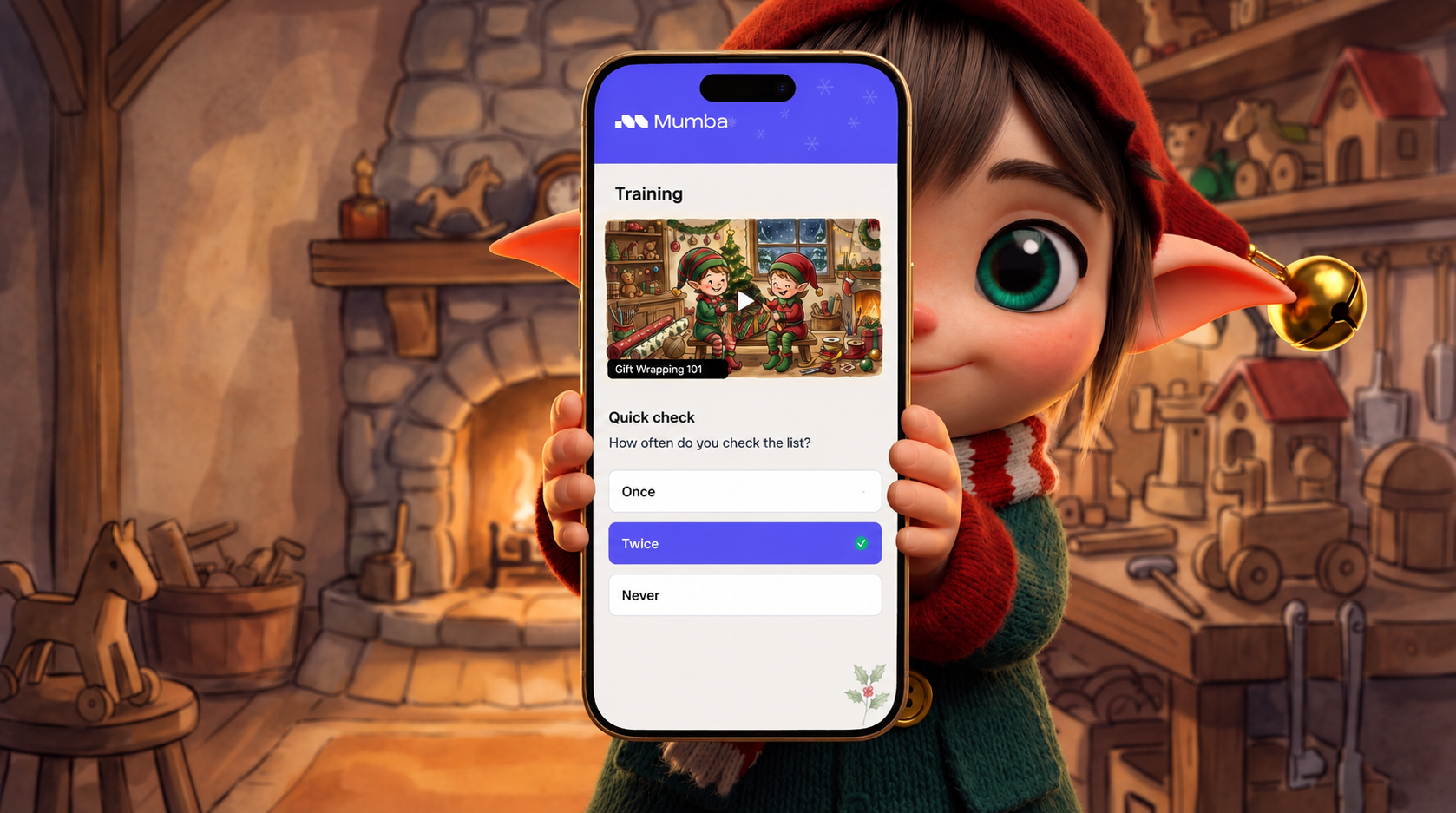
- Confirm understanding with a short quiz, not just a tick that says they opened the document.
- Give them a buddy and one named person to go to.
The difference between "I have read it" and "I understood it" is the difference between a tick box and actual competence. In a peak trading period, that gap is where things go wrong.
How do you keep casuals safe and engaged through the peak?
Stay on top of the two things that slip when everyone is flat out: compliance and morale.
The peak is exactly when certifications lapse unnoticed and new casuals quietly disengage. Both are avoidable with a few habits:
- Track certifications and renewals so nothing expires mid-peak, especially RSA and food safety.
- Push shift updates, roster changes and critical alerts straight to the phone, where casuals will actually see them.
- Run a quick pulse check. Are they coping? Do they feel safe at work?
- Recognise good work early. It is the cheapest retention tool you have.
- Meet your work health and safety duties on psychosocial risk, and keep an easy channel open for questions and incidents.
Retention through December is not a nice-to-have. Every casual who walks out is one you have to rehire and re-onboard while the store is at its busiest.
What should you do when the season ends?
Finish cleanly, and keep the people worth keeping.
Most casuals leave in January. Two things matter now. A clean exit, and a plan to bring your best people back.
- Offboard properly: revoke access, collect uniforms and equipment, finalise pay.
- Ask for feedback on their onboarding while the experience is still fresh in their mind.
- Flag your standout performers for permanent roles or a call back next Christmas.
- Capture what broke this year, so next December is smoother than this one.
The casuals who were great this year are the fastest hires you will ever make next year, but only if you kept a record and stayed in light contact.
Why frontline onboarding needs a frontline tool
Here is the thing most onboarding software gets wrong. It was built for office workers with a laptop, a company email and a desk. Your Christmas casuals have none of those. They have a personal phone, a short break, and no patience for a clunky process.
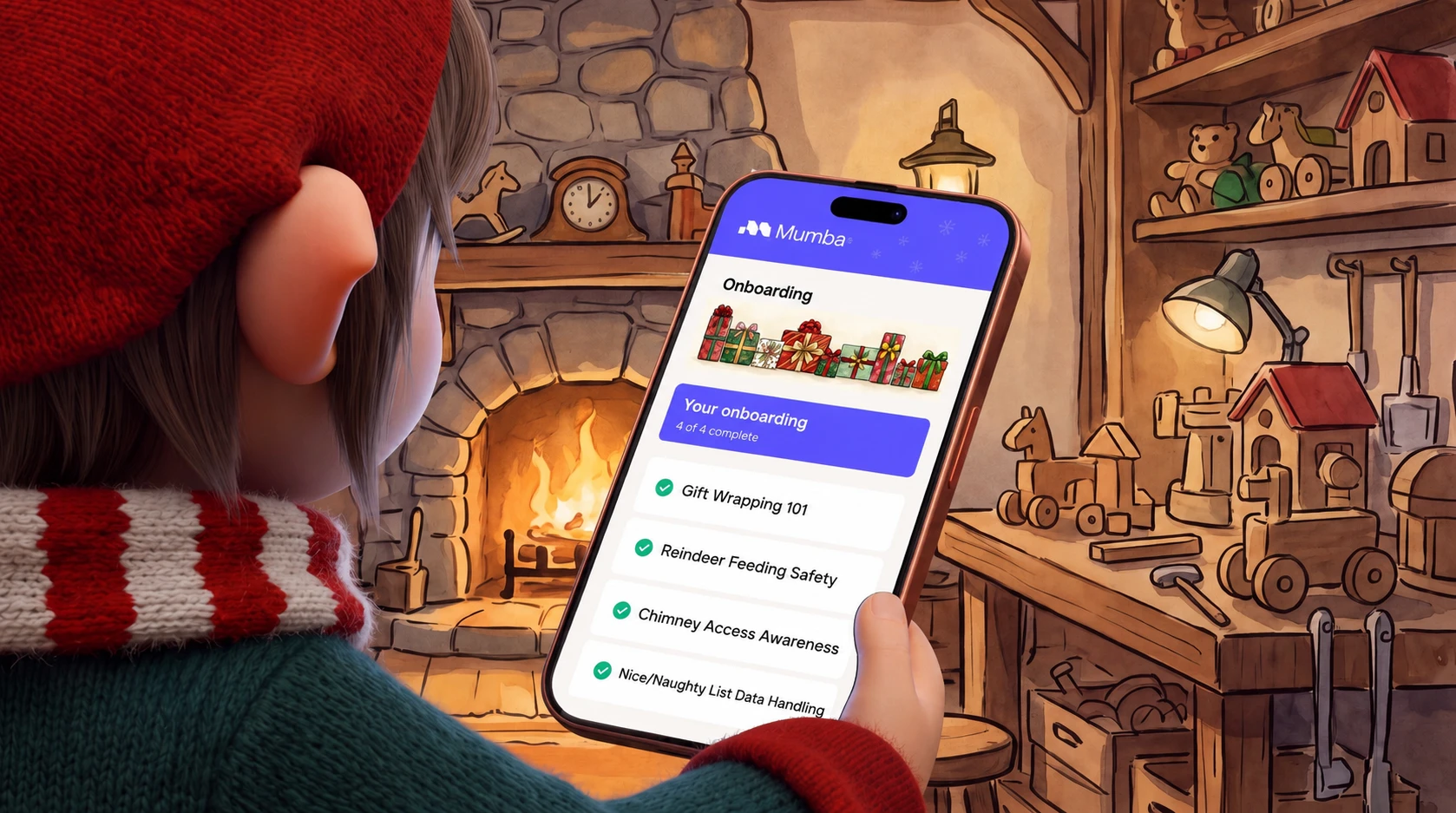
Mumba is built the other way around. It runs on a worker's own phone, so there is nothing to set up and no company email to chase. You build your onboarding flow once, as guided must-do steps with mandatory training gates, and every casual walks the same path. Adoption averages 89% within 30 days, which matters, because an onboarding process nobody opens is not a process at all.
The compliance work is where it earns its keep. Policies are accepted on first login behind a must-acknowledge flow with a timestamped audit trail, so when a WHS inspector asks who read what and when, you can prove it. Mandatory training gates hold the floor until training is done, and a built-in quiz confirms understanding rather than assuming it. Completion dashboards show pass rates and who is still outstanding, filterable by team or location. Certification tracking sends reminders 60, 30 and 7 days before expiry, so nothing lapses in the middle of your busiest week. And each casual's record, training and compliance history stays on file, so re-onboarding a returning casual next Christmas is faster than starting from scratch.
None of this replaces good HR judgement. It just means your team spends December making decisions, not chasing paperwork.
The short version (TLDR)
Christmas hiring is a volume problem. Your onboarding does not have to be. Set the machine up before the rush, gate the floor behind training that people actually understand, keep compliance and morale on track through the peak, and finish the season with a record of who is worth calling back.
We have put the whole thing into a free six-week checklist you can print, share with your team, and work through phase by phase.
Download our Christmas Casual Onboarding Checklist and set your team up before the rush hits.
Staffing up for Christmas already? The time to build your onboarding is now, not in December. See how Mumba handles seasonal onboarding.
*This article is general guidance to help you plan seasonal onboarding. It is not legal advice. Employment, work health and safety, and right to work obligations change and vary by state and by role, so confirm current requirements with Fair Work, Safe Work Australia and your own advisers before you rely on them.
Give your frontline team
the employee experience they deserve.
Book a 20-minute discovery session with our team to talk through your current challenges and explore whether Mumba is the right fit.
Flexible & scalable packages · Dedicated onboarding support · Live in weeks
Book a discovery session.
Book a 20-minute discovery session with our team to talk through your current challenges, see how other providers are approaching them, and explore whether Mumba is the right fit.
We'll get back to you within one business day.