December 5, 2025
Metcash, one of Australia’s leading wholesale companies, chose Mumba - here's why
There's a quiet assumption baked into most HR technology: that the people using it have a work email address, a desk, and a few spare minutes between meetings to log in and find what they need.
For the millions of Australians working on the frontline; in warehouses, distribution centres, retail floors, and logistics networks, that assumption is wrong. And it's costing organisations more than they realise.
Fragmented communication, low engagement, and over-reliance on managers for basic HR queries aren't signs of a disengaged workforce. They're often signs of a technology strategy that was never really designed with frontline employees in mind.
Metcash is the business behind some of Australia's most recognisable independent retail brands; IGA, Mitre 10, Cellarbrations, Total Tools and more, and with a network spanning more than 10,000 independent retailers, they know a thing or two about what it takes to keep a large, dispersed workforce connected and informed. Here's what they found, and what they did about it.
Before implementing Mumba, frontline communication at Metcash was, in Nicole Tassone -Group Manager People Enablement's words, "highly fragmented and difficult". The reasons will sound familiar to anyone who has tried to reach a shift-based, deskless workforce at scale.
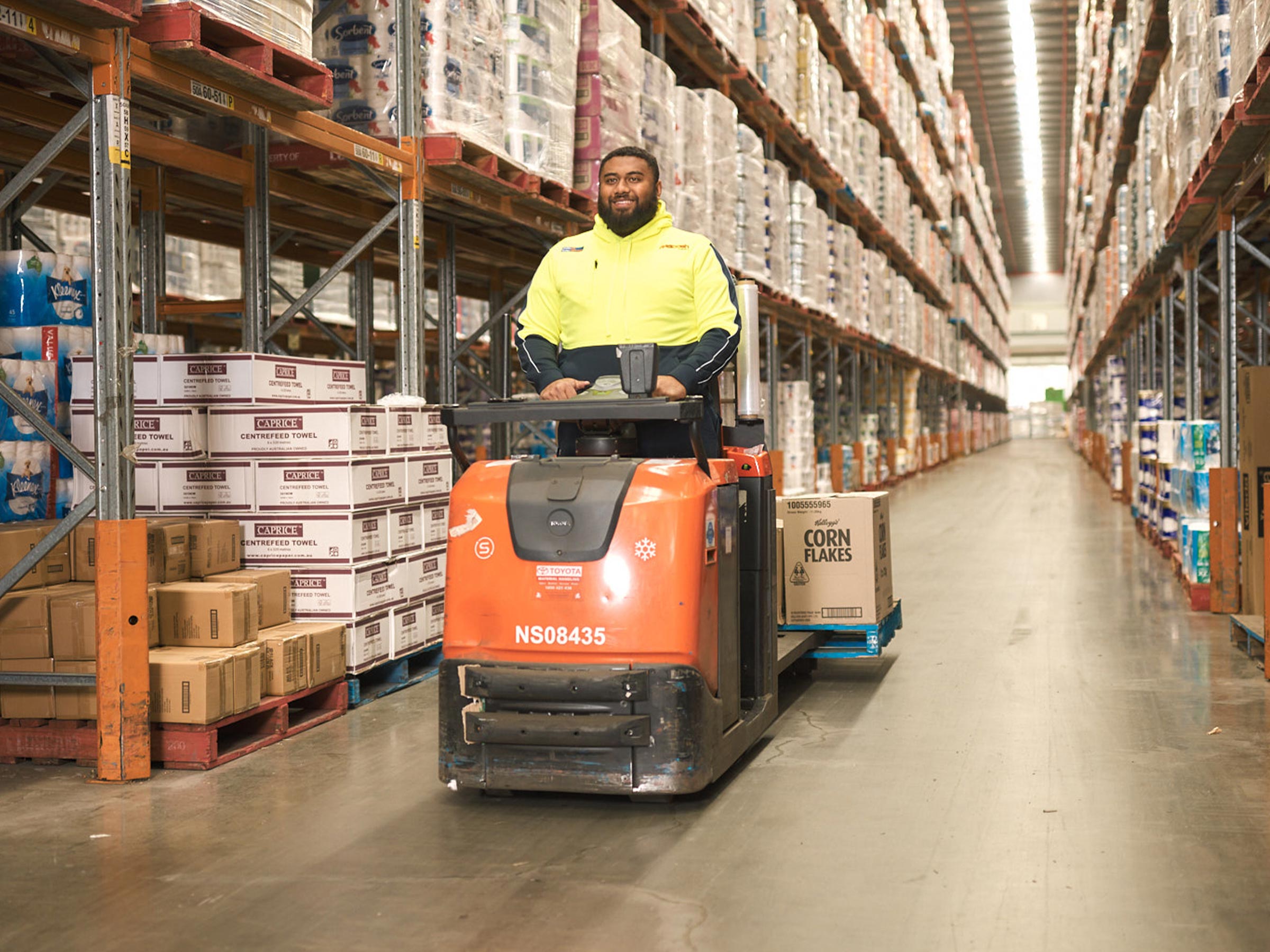
Without consistent access to work email, shared devices were the norm, which meant that critical messages around safety, policy updates, pay, and organisational change couldn't reliably reach the people who needed them most. Information cascaded down through layers of management, degrading along the way. There was no single place frontline employees could go to get answers, access their payslips, check leave balances, or find a form.
The result? Frontline staff leaned heavily on managers and HR teams for queries that should have been self-serve. And the people tasked with running the business were spending time answering questions that a well-designed digital experience should have handled automatically.
This is one of the most common, and most under appreciated, failure modes in HR technology: building tools for the corporate centre and hoping they'll work for everyone else.
Even with the right solution in place, getting frontline workers to actually use new technology is a challenge that many organisations underestimate.
At Metcash, the biggest hurdles weren't technical, they were behavioural and trust-based. Frontline employees were understandably cautious about installing a company app on their personal devices, with concerns around privacy, tracking, and data usage. There was also the very real problem of change fatigue: a workforce that has seen initiative after initiative come and go develops a healthy scepticism about "another app" unless it quickly and clearly adds value.
Add to that a wide spectrum of digital confidence across the workforce, and the risk of early disengagement was significant. Without careful change management, Mumba risked being written off as just another payroll portal, useful once a fortnight, ignored the rest of the time.
This is where many HR technology rollouts stall. The platform gets launched, adoption numbers look reasonable in week one, and then usage quietly flatlines. The tool becomes something people tolerate rather than something they reach for.
So what made Mumba stick at Metcash?
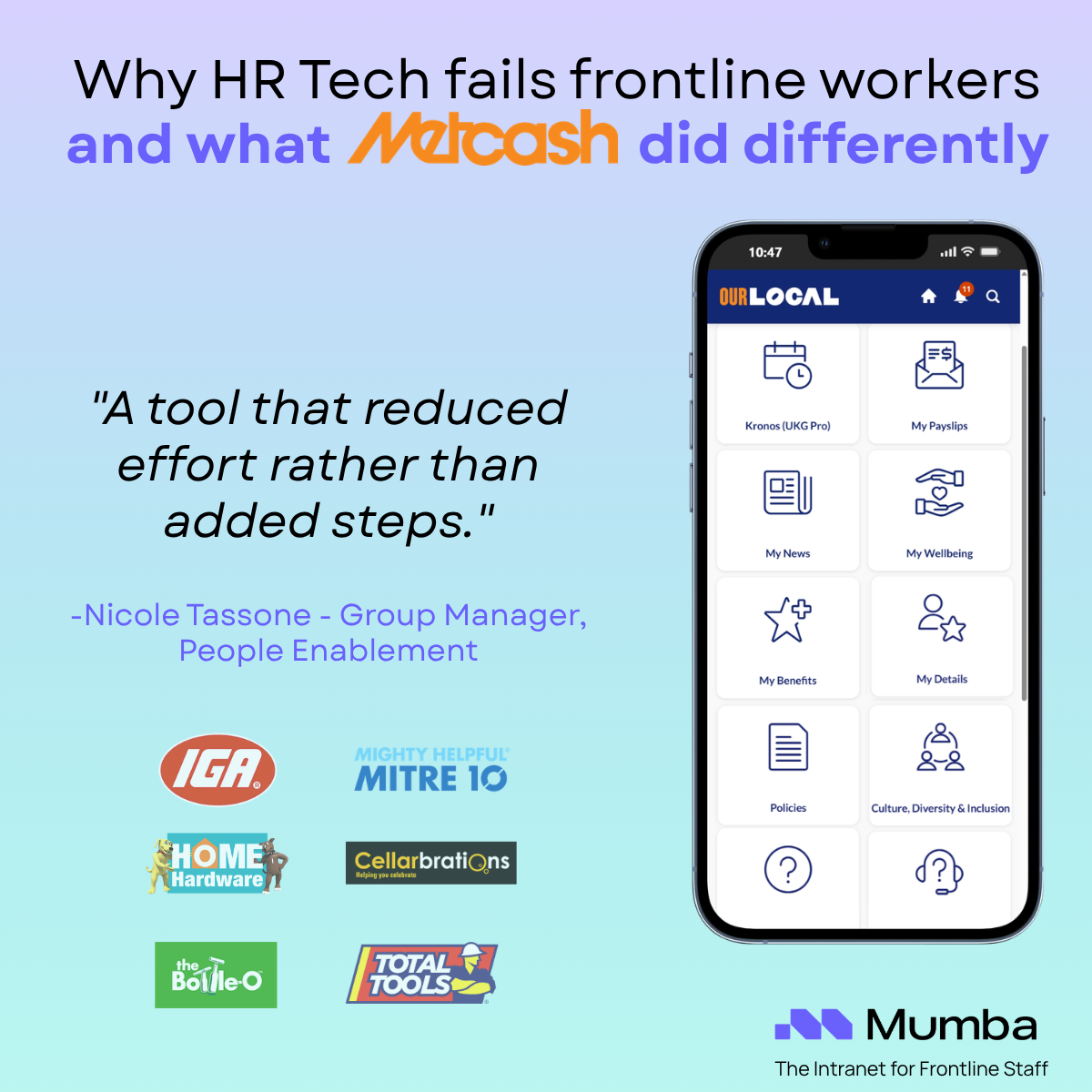
The shift happened when the platform stopped feeling like a system and started feeling like a shortcut. In Nicole's words, Mumba became genuinely embedded when it was "the fastest way to get answers, the default place for people actions, and a tool that reduced effort rather than added steps."
That framing is worth sitting with. Frontline employees aren't looking for a comprehensive HR platform, they're looking for the path of least resistance to getting what they need and getting back to work. When technology earns that role, adoption follows naturally. When it doesn't, no amount of internal communications or manager nudging will compensate.
This is the insight that separates organisations with genuinely frontline-first technology from those still wondering why their engagement numbers aren't moving: adoption is a product problem before it's a change management problem.
The results at Metcash speak to something more meaningful than simple adoption statistics.
The organisation has seen very high uptake across its weekly-paid workforce, but more telling than the headline number is how people are using the platform. Rather than one-off logins driven by a pay cycle or a specific query, Metcash is seeing multiple logins per user per week. That pattern of regular, repeated engagement is the difference between a tool people use because they have to and one they reach for because it genuinely makes their working day easier.
That's habit formation. And in a frontline environment, where technology has historically been bolted on rather than built in, it's a meaningful signal that something has genuinely changed.
Metcash's experience points to a few principles that apply well beyond their industry:
1. Start with access, not features - If your frontline employees can't reliably get into the platform, nothing else matters. Solve the access problem first – personal devices, simple login, no email required.
2. Earn trust before you ask for behaviour change - Concerns about privacy and data usage are legitimate. Acknowledge them, address them directly, and give employees a reason to say yes.
3. Make the platform the path of least resistance - If using your HR tool takes more effort than asking a manager, people will ask the manager. The goal is to become the obvious first stop.
4. Measure habit, not just adoption - Login counts at launch tell you very little. Return visits, frequency of use, and breadth of features accessed over time tell you whether you've actually changed behaviour.
Frontline workers aren't hard to engage. They're just used to being an after thought. Get that right, and the results follow.
See why HR teams are switching to Mumba. From onboarding to compliance, comms, and change — Mumba replaces complexity with clarity. Run HR faster, simpler, and smarter.
See how one simple platform can transform how you run HR and help you focus on what matters: your people.
We're a trusted partner for some of Australia's largest companies